Hospitality operations
Post-Cleaning Property Checklist for Accommodation Owners
Published: Author: Houseng Turkish version of this post
A cleaned unit is not always a ready unit. Cleaning removes dirt. A post-cleaning check confirms that the property is in the condition the next guest expects. For owners and investors, a clear checklist keeps standards consistent, whoever does the work. This article sets out a practical accommodation property checklist that you can adapt to your own apartment or building.
Why a check after cleaning matters
Cleaning teams work fast and often alone. Small misses are normal: a forgotten corner, a blown bulb, a remote control without batteries. A second look, ideally by a different person, catches these before a guest does.
The check also creates a record. Over time it shows which items fail most often, so you can fix the cause rather than the symptom.
Entrance, bedroom and living areas
Walk through in the order a guest would, starting at the door.
- The lock, keys or access codes work as expected.
- The air is fresh, there is no odour, and the windows close properly.
- Floors are clean, including under beds and behind doors.
- Beds are made to your standard, and linen has no stains or damage.
- Surfaces, shelves and mirrors are dust-free and streak-free.
- Curtains, blinds and lights work.
- Remote controls, Wi-Fi details and house information are in place.
Bathroom and kitchen
These two areas show cleaning quality fastest.
Bathroom
- The toilet, shower, basin and drains are clean, with no hair or limescale.
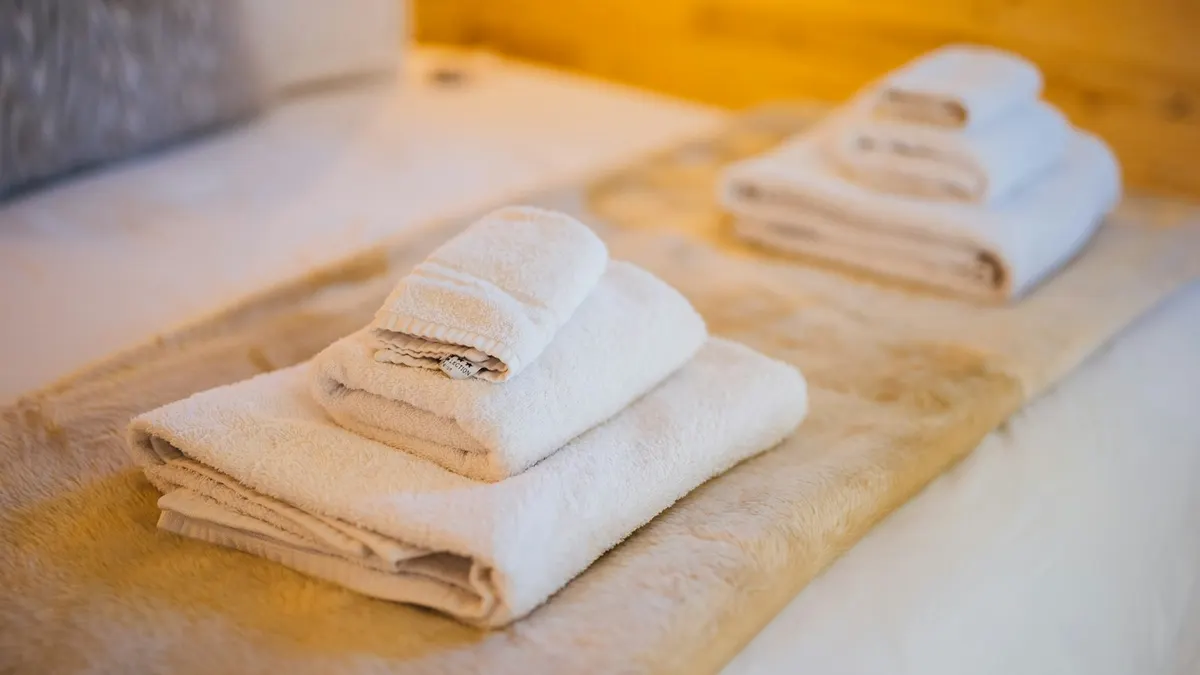
- Towels are fresh, in the right number and folded to standard.
- Hot water works and there are no leaks under the basin.
- Soap, toilet paper and other supplies are stocked.
Kitchen
- The fridge is empty of previous guests' items, clean and odour-free.
- The hob, oven, microwave and kettle are clean inside.
- Crockery, cutlery and glasses are complete and spotless.
- The bin is emptied and has a new liner.
Safety, equipment and supplies
This part protects both the guest and the property.
- Safety items such as smoke detectors and a first-aid kit are present and accessible, in line with your building's own requirements.
- Heating, cooling, the washing machine and the hairdryer work.
- The inventory matches your list, with nothing broken or missing.
- Consumables such as cleaning supplies, spare bedding and bin liners are stocked.
- Any damage left by the previous guest is noted and photographed.
Recording results and follow-up
A checklist only helps if it is used the same way every time.
- Use one form per unit, written or digital, with the items in the same order.
- Take photos of key areas as a reference.
- Mark each item as pass, fix or report, and add the name of the checker and the time.
- Fix issues before the unit is released. If that is not possible, mark the unit as not ready.
- Review the records regularly. Repeated failures usually point to training, supplies or maintenance needs.
- Share a short summary with the property owner, so the process stays transparent.
Frequently asked questions
Who should carry out the check? Ideally someone other than the cleaner, such as a supervisor or an operations coordinator. If that is not possible, the cleaner can use the checklist as a self-review, with occasional spot checks by someone else.
How long should the check take? It depends on the size and layout of the unit. A focused walk-through with a clear list should take only a few minutes. Rushing it defeats the purpose.
Should the checklist be the same for every property? Keep a core list and add items for each property. A studio, a family apartment and a small hotel room need different checks.
When should we update the checklist? Whenever you add equipment, change your standards or notice a recurring problem. A regular review keeps the list useful.
This article is general information and does not replace advice from a qualified expert. If you would like to see how Houseng approaches daily operations, you can read about our solutions or contact us.